The Closing Itself
What Is the Florida Flood Disclosure for Home Sellers?
Direct answer
Under section 689.302, Florida Statutes, a seller of residential real property must complete a flood disclosure and give it to the buyer at or before the time the sales contract is signed. The form asks whether the seller knows of flood damage during their ownership, filed a flood claim, or received flood aid, such as from FEMA.
Key takeaways
- Section 689.302 prints the flood disclosure form word for word, and the seller completes it and gives it to the buyer at or before contract signing.
- The form covers the seller's own ownership period: known flood damage, flood insurance claims (including NFIP claims), and flood assistance (including FEMA aid).
- It defines flooding to include tidal or inland overflow, rapid runoff from a river, stream, or drainage ditch, and sustained standing water from rainfall.
- A title search and a title insurance policy do not answer flood questions; flood damage is a homeowner's or flood insurance matter.
- In a FEMA special flood hazard area, a federally regulated lender generally will not close a mortgage on the home without flood insurance in place.
- This article is general information, not legal or insurance advice. Talk to a Florida real estate attorney or a licensed insurance agent about your sale.
What is the Florida flood disclosure for home sellers?
It is a short written form a seller gives the buyer about the property's flood history. Section 689.302, Florida Statutes, requires a seller of residential real property to complete it and prints the exact wording, so the form looks the same on a Spring Hill ranch home or a Tampa Bay townhouse.
The form opens with a flood insurance notice. It tells the buyer that homeowners' insurance policies do not include coverage for damage resulting from floods, and it encourages the buyer to talk with an insurance agent about separate flood coverage.
The section was added in 2024 (chapter 2024-215) and amended in 2025 (chapter 2025-166). Use the current statute text, not an older copy saved in a listing folder.
When does a Florida seller have to give the flood disclosure?
At or before the time the sales contract is executed. Section 689.302 says the seller must complete the flood disclosure and provide it to the purchaser by then, so the buyer has it before agreeing to buy, not after inspections or at the closing table. The seller fills it in; nobody else answers for the seller.
The easiest time is with the listing paperwork, so a completed form is ready when an offer comes in. Our Florida seller closing checklist covers the other items to gather early. Other pre-contract notices can apply to the same home, such as the HOA disclosure summary in a mandatory homeowners' association or the PACE notice for a home with a PACE assessment. Every Florida building sale also needs the separate radon gas notice under section 404.056, which asks the seller no questions.
The section itself does not spell out a remedy if the form is late, missing, or inaccurate. If that happens on your sale, ask a Florida real estate attorney what it means under your contract.
What does the Florida flood disclosure form ask the seller?
Three yes-or-no questions, all limited to the seller's own ownership period. The seller checks whether they have knowledge of flooding that damaged the property, whether they filed a flood damage insurance claim, including with the National Flood Insurance Program, and whether they received flood damage assistance, including from FEMA.
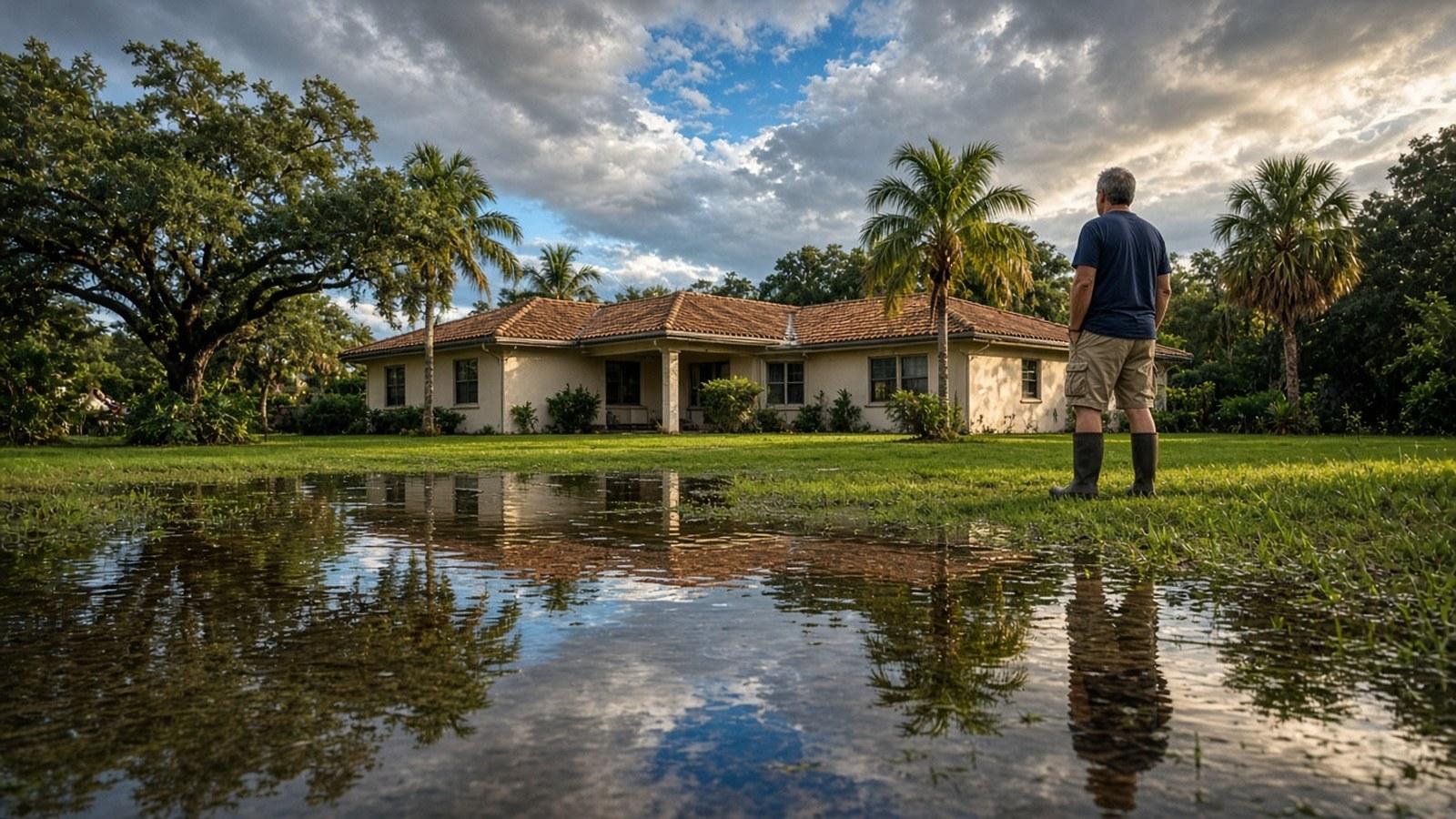
The form then defines flooding for the disclosure. It is a general or temporary condition of partial or complete inundation of the property caused by any of three things in the table below. Standing water in a yard after days of rain can count, not only water from the Gulf or a river.
Because the questions are about the seller's ownership, a seller who bought recently answers only for that time. A buyer who wants a longer history can ask for it, but the statutory form does not require it.
| Form item | What the seller answers |
|---|---|
| Flood insurance notice | No answer; it tells the buyer homeowners' policies do not cover flood damage and suggests talking with an insurance agent |
| Item 1: flood damage | Whether the seller has knowledge of any flooding that damaged the property during the seller's ownership |
| Item 2: insurance claims | Whether the seller filed a claim with an insurance provider for flood damage, including a National Flood Insurance Program claim |
| Item 3: flood assistance | Whether the seller received assistance for flood damage, including assistance from FEMA |
| Item 4: what "flooding" means | Overflow of inland or tidal waters; unusual and rapid runoff or surface water from an established source such as a river, stream, or drainage ditch; sustained standing water from rainfall |
Does a title search or title insurance cover flood risk in Florida?
No. A title search reviews recorded documents such as deeds, mortgages, liens, and easements, and a flood claim or a wet lawn is not in those records. An owner's title policy insures ownership against covered title problems. It does not pay for flood, storm, or water damage to the house.
Our guide to what title insurance does not cover explains where that line falls. Flood damage belongs to a flood policy, and wind damage belongs to the homeowner's or wind policy, not the title policy.
A survey is not a flood report either. The surveyor locates boundaries and improvements, while an elevation certificate is a separate flood document. Our comparison of a survey and a title search covers what each one shows.
When does a Florida buyer's lender require flood insurance before closing?
When the home is in a FEMA special flood hazard area and the loan comes from a federally regulated lender. Under 42 U.S.C. 4012a(b), such a lender may not make the loan unless the building has flood insurance for the loan's term, at least equal to the principal balance or the maximum coverage available, whichever is less.
The same statute directs regulated lenders to accept private flood insurance that meets the federal coverage requirements, so the policy does not have to come from the National Flood Insurance Program. The lender's own rules, and the buyer's insurance agent, decide which policy works for the loan.
Timing matters. FEMA's flood insurance buying guide says coverage generally starts 30 days after purchase, but there is no wait when the policy is bought while making, increasing, extending, or renewing a mortgage. Under 44 CFR 61.11(b), that coverage is effective at loan closing if it is applied for and the premium is presented at or before closing.
Complete the seller's flood disclosure
The seller fills in the section 689.302 form, answering the three questions about flood damage, flood claims, and flood assistance during the seller's ownership.
Give it to the buyer before the contract
The seller provides the completed form to the buyer at or before the time the sales contract is signed, often with the listing paperwork.
Check the flood zone
The buyer looks up the property on the FEMA Flood Map Service Center and tells the loan officer early if the home may be in a special flood hazard area.
Line up flood coverage
The buyer talks with a licensed insurance agent about a new policy or taking over the seller's existing flood policy, and applies before closing if the lender requires coverage.
Send the insurance details to closing
The buyer sends the homeowner's and any flood policy information to the lender and the closing agent so the premium and escrow figures land on the settlement statement.
What should a Florida buyer check about flood risk before closing?
Start with the seller's disclosure, then look past it. The form only covers what the seller knows from their own ownership. A buyer can check the home on FEMA's Flood Map Service Center, ask whether the seller has an elevation certificate, and ask an insurance agent for a flood quote before the inspection period ends.
Ask about the seller's current flood policy. FEMA's real estate professionals Q&A says a seller can transfer their policy to the new owner, whether or not there is a mortgage. An insurance agent can confirm whether that makes sense for the buyer.
Flood questions come up across Hernando County and Pasco County, from coastal canal homes to inland lots near drainage ditches. Raise them early, so a lender's flood insurance requirement does not surface the week of closing.
Frequently asked questions
Do Florida home sellers have to disclose past flooding?
Yes. Section 689.302 requires a seller of residential real property to give the buyer a completed flood disclosure at or before contract signing. It asks about known flood damage, flood insurance claims, and flood assistance during the seller's ownership.
Does the Florida flood disclosure cover flooding before the seller owned the home?
No. Each question on the statutory form is limited to the seller's ownership of the property. A buyer who wants earlier history has to ask for it or look for it elsewhere.
Does title insurance cover flood damage in Florida?
No. Title insurance covers ownership and covered title defects, not physical damage to the house. Flood damage is a flood insurance matter, and standard homeowners' policies do not cover it.
Can a Florida buyer get flood insurance that starts at closing?
Often, yes. Under FEMA's rules, the usual 30-day waiting period does not apply when the policy is bought in connection with making a mortgage loan, if it is applied for and paid at or before closing.
What counts as flooding on the Florida flood disclosure?
The form defines flooding as partial or complete inundation of the property from overflow of inland or tidal waters, unusual and rapid runoff from an established source such as a river or drainage ditch, or sustained standing water from rainfall.