The Closing Itself
Can You Sell a Florida Home With a PACE Assessment?
Direct answer
Yes. A Florida home with a PACE assessment can be sold. Section 163.081, Florida Statutes, makes the assessment a recorded lien of equal dignity to county taxes, collected on the property tax bill. The seller must give the buyer a written disclosure by contract signing, and the buyer's lender may require a payoff at closing.
Key takeaways
- PACE repays home improvements such as solar panels, a roof, hurricane windows, or a septic-to-sewer conversion through a non-ad valorem assessment on the property tax bill.
- The financing agreement is recorded in the county records and is a lien of equal dignity to county taxes from the date it is recorded.
- At or before signing a sale contract, the seller must give the buyer the qualifying improvements disclosure printed in section 163.081(8).
- The owner may repay the balance at any time without a prepayment penalty, apart from nominal administrative costs.
- A buyer's mortgage lender may require the balance to be paid off at closing; Fannie Mae generally will not buy a loan on a home with an outstanding PACE lien that has priority over the mortgage.
- This article is general information, not legal or tax advice. Talk to a Florida real estate attorney about your contract.
What is a PACE assessment on a Florida home?
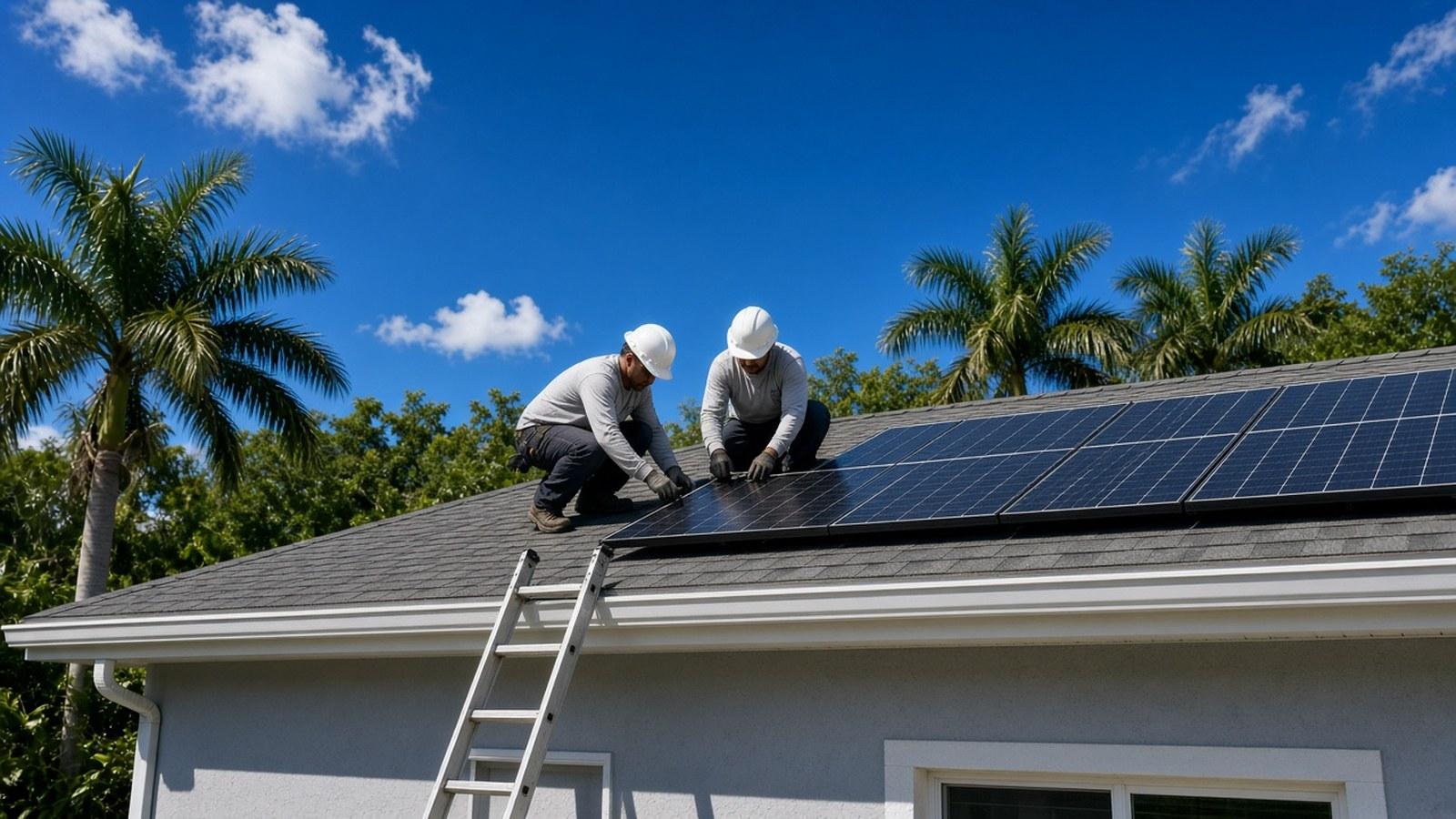
PACE stands for Property Assessed Clean Energy. In Florida it is financing for a home improvement that is repaid as a non-ad valorem assessment on the property tax bill instead of a monthly loan payment. Section 163.081, Florida Statutes, sets the rules for residential programs, and the county or city must authorize each program.
Only certain improvements qualify. Section 163.08(4) lists them for homes. "Residential property" there means property zoned residential with four or fewer dwelling units, so a single-family home or a small duplex in Spring Hill fits the definition.
The current statute was enacted in 2024 (chapter 2024-273). An agreement signed before then was made under the earlier version of the law, so the recorded agreement on that property is the document to read.
| Category | Examples in the statute |
|---|---|
| Wastewater | Repairing a central sewer connection, converting a septic system to central sewer, or upgrading a septic system where no sewer is available |
| Roof | Repairing or replacing a roof, strengthening roof deck attachment, secondary water barriers, wind-resistant shingles, gable-end bracing, roof-to-wall connections |
| Flood and water damage | Raising a structure above base flood elevation, drainage gates, seawall repair or replacement, flood-damage-resistant materials |
| Windows and doors | Impact-resistant or hurricane windows and doors, garage doors, storm shutters |
| Energy efficiency | Energy-efficient heating, cooling, or ventilation, insulation, energy-efficient water heaters |
| Generator | Installing and affixing a permanent generator |
| Renewable energy | Solar, geothermal, bioenergy, wind, or hydrogen systems |
Is a PACE assessment a lien that shows up in a title search?
Yes. Under section 163.081(7), the program administrator must record the financing agreement, or a summary memorandum of it, in the county where the home sits within 10 business days after signing and the 3-business-day cancellation period. The recorded agreement gives notice that the assessment is a lien of equal dignity to county taxes.
Because it is recorded, a title search of the county's official records should find it, along with the mortgages and judgments on the property. A PACE item on the commitment is handled before closing, not after.
The yearly installment is billed with the property taxes, not in the deed books. That is why the tax bill and the recorded agreement both matter on a PACE file. The statute also says the lien cannot be enforced by accelerating the remaining balance that is not yet delinquent.
What must a Florida seller disclose about a PACE assessment?
A seller must give the buyer a written notice. Section 163.081(8) says that at or before the time a seller signs a contract to sell residential property with a PACE assessment that has an unpaid balance, the seller must give the prospective buyer a disclosure statement, either in the contract or in a separate writing.
The statute prints the wording. It tells the buyer that the property is subject to an assessment under section 163.081, that the assessment is for a qualifying improvement and is not based on the property's value, and that the buyer is encouraged to contact the property appraiser's office to learn more about this and other assessments.
Put the notice with the listing paperwork so it is ready before any offer is signed. Our Florida seller closing checklist covers the other items a seller should gather early. A home in a mandatory homeowners' association may also need the separate HOA disclosure summary, which is a different form under a different chapter.
Does a PACE assessment have to be paid off when a Florida home is sold?
Not always by statute, but often in practice. Section 163.081(4)(a) requires the program to warn the owner, before signing, that a mortgage lender may require the full amount owed to be paid off if the owner sells or refinances. The same disclosure list says the owner may repay at any time without a prepayment penalty.
Lender rules drive the answer for a financed buyer. Fannie Mae's Selling Guide, section B5-3.4-01, says Fannie Mae will not purchase a mortgage secured by a property with an outstanding PACE loan unless the PACE program does not give the lien priority over first mortgages. FHA, VA, and other loan programs have their own rules, so ask the buyer's lender early.
On a cash sale, or when the buyer's lender allows it, the contract can call for the buyer to take the home subject to the assessment. Whether the seller pays it off or the buyer assumes the remaining installments is a contract term, so put it in writing and ask a Florida real estate attorney if the contract is silent.
How is a PACE assessment handled at a Florida closing?
Like any other lien: it is found, priced, and either paid or carried forward by agreement. The title commitment shows how the underwriter treats the recorded agreement, usually as a requirement to pay or as an exception the buyer accepts. Our guide to reading a Florida title commitment explains both schedules.
If the balance is being paid, the closing agent requests a written payoff figure from the program administrator or its third-party administrator, the same way a mortgage payoff is requested. The payoff appears as a seller charge on the settlement statement. Ask the program how it documents that the balance was paid, and keep that letter with the closing papers.
PACE is separate from the city and utility items that a municipal lien search looks for, so both checks belong on the order. The same statute applies to homes in Hernando County and every other Florida county that has authorized a residential PACE program.
Find the PACE agreement
Check the property tax bill for a non-ad valorem PACE assessment and the county official records for the recorded financing agreement or summary memorandum.
Give the buyer the disclosure
At or before signing the sale contract, the seller gives the buyer the section 163.081(8) qualifying improvements disclosure, in the contract or a separate writing.
Agree on payoff or assumption
The contract states whether the seller pays off the PACE balance at closing or the buyer takes the home subject to it, after the buyer's lender confirms what it allows.
Send the PACE details to the title company
With the signed contract, send the program name and any account number from the PACE paperwork so the title company can request a payoff.
Pay or carry it at closing
The payoff is charged on the settlement statement and paid from closing funds, or the recorded lien stays as an exception the buyer accepted.
What should a Florida buyer check before buying a home with PACE?
Three things: the balance, the yearly installment, and the lender's rule. Ask the seller for the PACE agreement and a current payoff figure, look at the last tax bill to see the installment, and tell the loan officer about the assessment at application, so a payoff requirement does not surface the week of closing.
The statute lists what happens if the installments go unpaid. Under section 163.081(4)(a), the owner must be told that nonpayment may lead to penalties, fees, court costs, and a tax certificate that could result in losing the property. A buyer who takes the home subject to the assessment takes on those installments with the tax bill.
A reverse mortgage changes the picture. Section 163.081(3)(a)10 does not allow a new PACE agreement on a home that already has a home equity conversion or reverse mortgage. That rule applies to new agreements; it does not by itself clear an existing assessment.
Frequently asked questions
Can I sell my Florida house if it has a PACE loan?
Yes. A PACE assessment does not stop a sale. The seller must give the buyer the section 163.081(8) written disclosure by contract signing, and the balance is either paid off at closing or left in place if the contract and the buyer's lender allow it.
Does a PACE assessment transfer to the buyer in Florida?
It can. The assessment is a recorded lien on the property, collected with the property taxes, so it stays with the home until paid. Whether the buyer takes it over or the seller pays it off is decided in the purchase contract.
Is there a prepayment penalty to pay off a PACE assessment early?
No. Section 163.081 says the owner may repay the remaining amount at any time without penalty, and it bars prepayment fees or fines other than nominal administrative costs.
Will a lender approve a mortgage on a Florida home with a PACE lien?
It depends on the lender and the loan program. Fannie Mae will not purchase a mortgage on a property with an outstanding PACE loan that has lien priority over the first mortgage, so many lenders require the PACE balance to be paid off at closing.
How much PACE financing can be placed on a Florida home?
Under section 163.081(3)(a), the total assessment generally may not exceed 20 percent of the property's just value as set by the property appraiser, unless the mortgage holder or servicer consents in writing, and the term may not exceed 20 years.